Keys to the Kingdom

My Kindle arrived yesterday. First impressions were not quite up to the technolust I feel when opening a box “Designed by Apple in California,” but pretty darned good. Amazon has done a nice job with the packaging and merchandising here. I particularly appreciate that the Kindle arrives already linked to my Amazon account. It literally works right out of the box. This also makes it painfully easy to immediately start buying content. After all, I want to read more than just the user’s guide on this thing!

I can tell I’m really going to like the ability to download free samples/trials of books. This may be my saving grace in terms of how easy the Kindle makes dropping money on books (the process is seamless and there’s no physical consequence, like buying music on iTunes). If I can discipline myself to always only download the sample on impulse, my kids may still go to college.

Foundation

I downloaded several sample chapters of books, but ultimately made a sentimental choice for first Kindle reading experience: Isaac Asimov’s Foundation (I fell in love with reading science fiction reading the Foundation books, immersing myself in the story of Hari Seldon).

In short, the Kindle passed the test. I was able to read quite comfortably for about half an hour before sleep overtook me. In fact, I found reading in bed with the Kindle to be superior in some ways; the device is so lightweight that holding it for an extended period of time is inconsequential. I found myself using the left-hand page button more frequently than the right, and quickly got used to the keypress/read, keypress/read rhythm. Reading off of Kindle’s grayscale screen, and the notorious flash while the screen refreshes takes some getting used to, but didn’t seem to impose any additional eye strain.

So far it has been a little bit hard to get past the “dude, I’m reading this on a Kindle” effect, but if the writing is high quality I no longer have any doubt that the experience will be just as immersive as paper.

One interesting effect I’ve noticed is that I seem to read faster on the Kindle; indeed, on more than one occassion I’ve had to force myself to slow down to really absorb the text.

My initial theory on this is that my brain is trained to quickly skim on-screen text, and has not yet found the distinction between skimming Twitter or feeds on my monitor or iPhone and close reading or its equivalent on the Kindle. There seems to be a kind of built-in impatience with large blocks of screen type. We’ll see if that changes as I spend more time with it.

Whispernet, as in “barely there”

So far, I’ve found the Whispernet (Amazon’s brand for the slice of Sprint’s 3G network) to be remarkably spotty and slow. Several times in the first 24 hours, it has dropped off completely, even in areas where I get quite strong AT&T 3G speeds on the iPhone. I never thought 3G would feel quite so snappy on my iPhone until I started playing with the Basic Web browser on the Kindle.

Speed issues aside, it is nice to have a (pretty vanilla) web browser on this thing. First thing I did web-wise was to load up my Instapaper account — now I can literally access my to-read pile of web articles from any device. Snazzy. And I’m not sure why I should pay Amazon to deliver blogs to me when Reader appears to work serviceablely well.

A Start

I’m sure there will be more thoughts to come, but I didn’t want to let the first 24 hours of this new adventure go by without some initial thoughts. I’m excited, and am even more convinced that the Kindle is paving the leading edge of how reading will increasingly happen.
Cooking: humanity’s ‘killer app'”?

As reported in The Economist, Harvard’s Richard Wrangham has a theory that “cooking and other forms of preparing food are humanity’s ‘killer app'”:

Cooking is a human universal. No society is without it. No one other than a few faddists tries to survive on raw food alone. And the consumption of a cooked meal in the evening, usually in the company of family and friends, is normal in every known society. Moreover, without cooking, the human brain (which consumes 20-25% of the body’s energy) could not keep running. Dr Wrangham thus believes that cooking and humanity are coeval.

In fact, as he outlined to the American Association for the Advancement of Science (AAAS), in Chicago, he thinks that cooking and other forms of preparing food are humanity’s “killer app”: the evolutionary change that underpins all of the other—and subsequent—changes that have made people such unusual animals.

(Hat tip to Alisa for the link on FB)

Magazines

When you consider that a fairly hefty slice of the success of my company still depends on the health of print media, it’s a little alarming to note that I’m actually surprised by just how many print magazines we still receive here in the Morrow household.

Magazines have been an easy place to cut spending iver the past year, but we still get a bunch.

Do we read them? Do you read all your magazines? Us neither.

Here’s a rundown of mags you’ll find around here:

Currently Receive

Let Them Expire in the Last Year

Ones I May Subscribe to (Again) Soon

(inspired by the Plinky prompt for 2/14/09)

Hey—what do you read? What am I missing out on?

There’s a Kindle a-coming

I ordered one of them fancypants ee-lectronic book readers from The Amazon, and if their delivery status is correct it will arrive two short weeks.

Last May, I wrote the following about my desire (and hesitations) about the Kindle:

As someone who always has at least two books on his person at almost all times and who agonizes about which books to bring along on a trip, I really like the idea of a smallish device with an entire library on-board, ready for any reading whim that may strike. I love the idea of decreasing the amount of physical clutter in our home that my book addiction creates (and I know my wife will appreciate this too!). I even like the idea that reading a book on-screen may even be helpful to the environment. I like the idea of searchable, easily retrievable notes and annotations, and the promise of instant, wireless delivery of a passing fancy.

And:

So could I be afraid that I’ll like an e-book reader too much? I think that may be closer to the truth. As a bibliophile, what does it mean if I prefer this new experience to the more tactile act of reading a paper book?

Once it shows up, I’ll keep you posted on the experience.

In the meantime, do you have any suggestions for my first Kindle reading experience?

A bucket is for carrying things somewhere, not storage

Twitterman Alex Payne wrote a pretty interesting an provocative post the other day, titled “The Case Against Everything Buckets.”

Rather than try to recreate his argument for him, go read it yourself. I’ll wait here.

At least in principle, I agree with Alex’s assertion that it can be immensely better to have your information available in an app that actually can do something with it. Nine times out of ten I prefer not to have information in any app at all, I like most of my stuff in the Finder where it is easily backed up, found, and mashed into other places. Preferably in plain text. Yes, I’m one of those people who buys $2,000 computers and prefers to work in the oldest and simplest data format in existence.

But I digress. I think Al3x is missing an angle in his implied assertion that Everything Buckets don’t do anything particularly well.

I think the value of Everything Bucket software, and in particular of Everything Bucket software that is either cloud-based or syncs nicely between desktop and mobile clients, is that these applications open your mind to the notion of ubiquitous capture.

And after all, you use a bucket for temporary storage, right? It’s a waystation.

I freely shove stuff into Evernote, Instapaper, and Everything Buckets because it’s so easy to do. The secret sauce that keeps it from becoming A Bad Thing is that I’ve built in a routine to go through them regularly, processing them David-Allen-style down to zero. It’s at that point that I’ll move data into another environment if it makes sense.

For example, I’ll see a link in Google Reader, scan it for interest, identify that I might want to use the idea in a story someday, and clip it to Evernote. Then at some regular interval I’ll pull the PDF out of that Evernote inbox and into the Finder as a PDF or webarchive in a directory structure like “Story Ideas/2009/…”

The only stuff I keep in Evernote full-time is stuff I know I’d like to have reference to no matter were I am—be it on my Macbook, on my iPhone, or on my work PC.

Not really rocket science, and YMMV. The point is, as always, pare down the number of places something can be, and put it somewhere where it should be. Those definitions of can and should are yours to make.

Update 2009-02-10: Here’s Buzz Andersen’s take on it.

Three random karaoke songs I’d sing after a little bourbon

The Seed by Cody Chesnutt

Because this is the catchiest, nastiest song from The Headphone Masterpiece. And because I might need a drunken excuse to sing the lyrics: "Push my seed somewhere deep in her chest, I push it naked cuz I've taken the test."

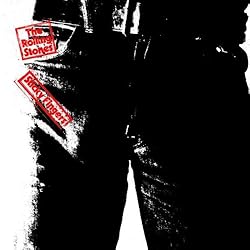
Brown Sugar by The Rolling Stones

Because it would give me a chance to unhook my Jagger strut.

Stereo by Pavement

Give me hysteria! Malaria!